Proposed Project

Abundant water is often right under our feet! Beneath the Earth’s surface, rivers called aquifers flow through layers of sediment and rock, providing a constant supply of safe water. For borehole wells, we drill deep into the earth, allowing us to access this water which is naturally filtered and protected from sources of contamination at the surface level. First, we decide where to drill by surveying the area and determining where aquifers are likely to sit. To reach the underground water, our drill rigs plunge through meters (sometimes even hundreds of meters!) of soil, silt, rock, and more. Once the drill finds water, we build a well platform and attach a hand pump. If all goes as planned, the community is left with a safe, closed water source providing around five gallons of water per minute! Learn more here!
Project Type: Borehole Well and Hand Pump
Program: Wells for Sudan
Impact: 0 Served
Project Phase:
Canceled/Re-Allocated
Click Here for the New Project
Project Features
 Borehole Well and Hand Pump
Abundant water is often right under our feet! Beneath the Earth’s surface, rivers called aquifers flow through layers of sediment and rock, providing a constant supply of safe water. For borehole wells, we drill deep into the earth, allowing us to access this water which is naturally filtered and protected from sources of contamination at the surface level. First, we decide where to drill by surveying the area and determining where aquifers are likely to sit. To reach the underground water, our drill rigs plunge through meters (sometimes even hundreds of meters!) of soil, silt, rock, and more. Once the drill finds water, we build a well platform and attach a hand pump. If all goes as planned, the community is left with a safe, closed water source providing around five gallons of water per minute! Learn more here!
 Rehabilitation Project
Rehabilitation is not just fixing a pump - it’s total community re-engagement.
There’s only one thing we can think of that might be worse than not having safe water: having safe water, and then losing it because a project fell into disrepair.
Rehabilitation often proves to be a big challenge, as many wells have sit idle for years and there is typically little information about the specifics of the well. A borehole and dug well rehabilitation involves quite a bit of discovery. First, our teams work to discover as much as they can about the initial project. What materials were used? Was the borehole/protected dug well properly constructed? Many of these questions can only be answered by diving in, and doing “the work” which makes up a rehabilitation.
Once our teams have found the problem, they find the solution. Then, they reconstruct the well and install a hand pump.
Engagement and training with communities takes into account rehabilitation was needed and alters the program to suit the needs of the community. After all - engaging with this community in the same way which led to the initial, failed project will not bring new results. Our teams work to understand the social and support reasons leading to initial failure, and make those areas a focus of our ongoing engagement with communities.

Local Leadership
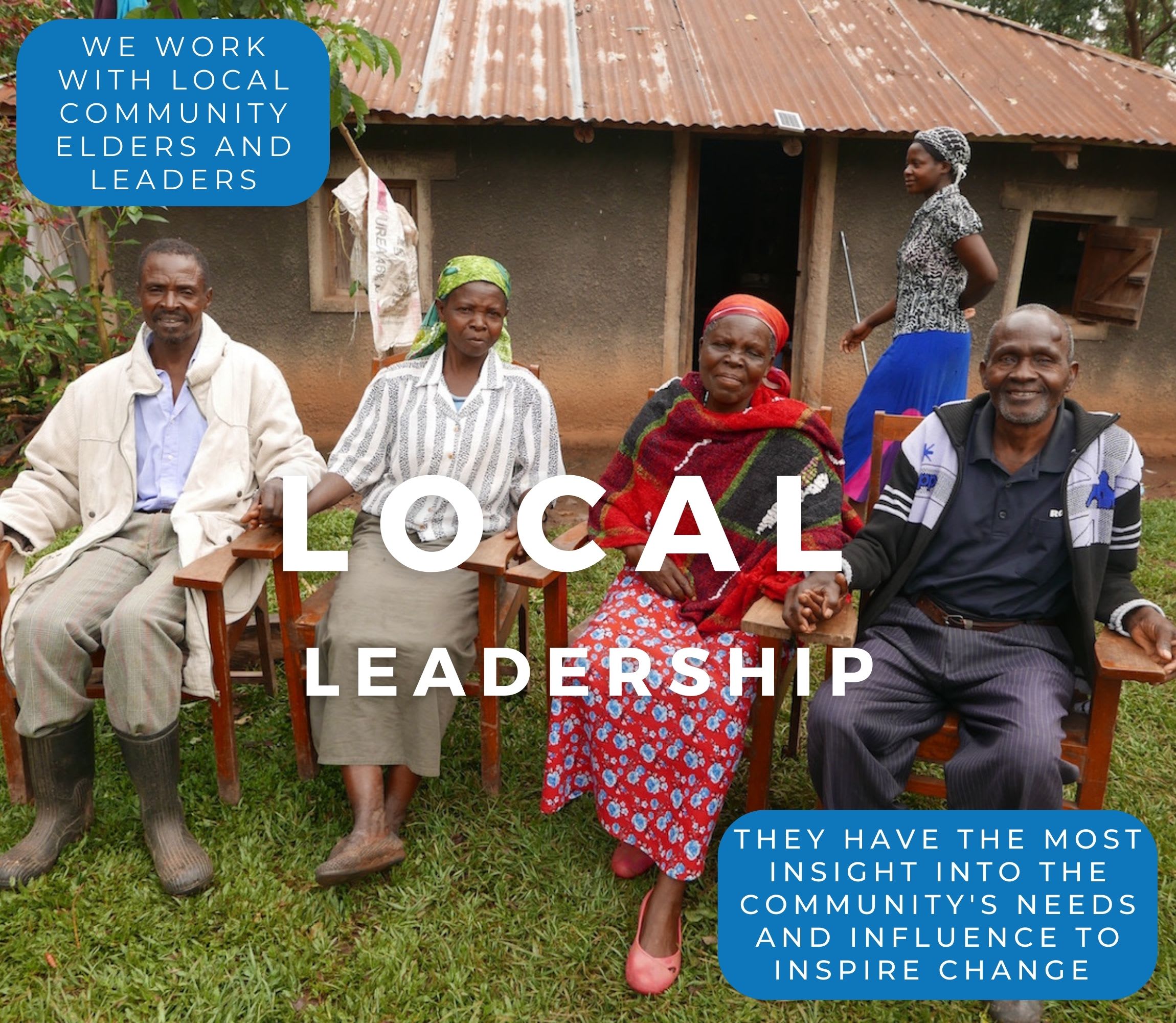
Water projects don’t last long without the help of local leaders. They’re the ones who explain the situation on the ground to us (and our donors!) while also outlining our goals and intentions for the community members.
The Water Project identifies, supports, and partners with local organizations that share our vision of reliable, verifiable, and clean water. Together, we build lasting local solutions and undertake ongoing monitoring and resolution to ensure our solutions are still working years into the future.

Community Engagement

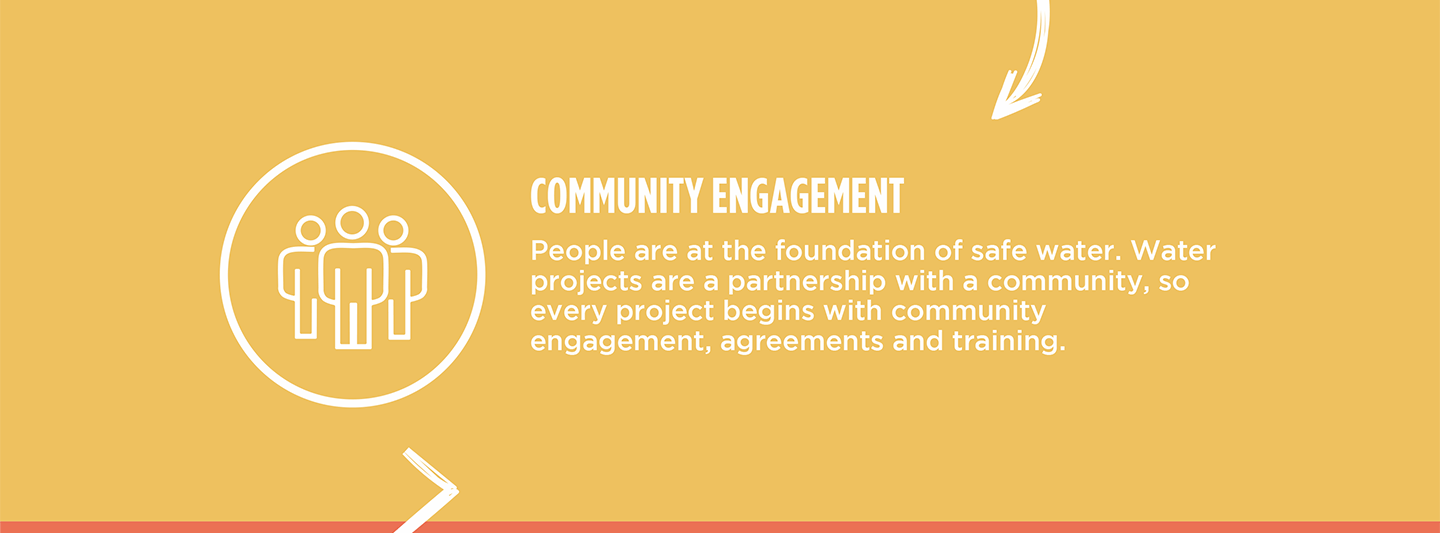
We engage the communities we work with at every step of a water project.
These interactions are rooted in relationship-building. We involve the community in implementation, set expectations for water point management, prepare community members for ongoing costs, and more. All of this happens before a water project is installed.
The people receiving a water project get a leading seat at the table. Every water project we implement requires negotiations with several interested parties. During this step and every other, we continuously try to embody our favorite ideals: reliability, relationship, and trust.

Hygiene and Sanitation Training

For many communities, water is just the beginning. Living without water deprioritizes things that deplete water rations, like bathing, cleaning, and even handwashing. Also, in some cases, community members who couldn’t afford to go to school never learned topics usually covered in health classes. A steady water supply on its own won’t solve these issues, which is why we train the people in every community, school, and health center we provide with a water project.
Although we tailor the subjects we cover in each training to each region and community, there are some staples we always touch on: water handling and storage; personal and environmental hygiene; disease transmission; how to form and maintain a water user committee; and the operation/maintenance of the community’s new water project.
With each training, our goal is to empower communities to take back their personal health so growth and development can begin.
Click icons to learn about each feature.
Program Plans
Wells for Sudan

Project Type: Borehole Well and Hand Pump
Project type subject to change prior to completion based on community needs and geographical and hydro-geological limitations.
WHI drills for rural communities, usually with 10-50 households. Most
villagers are originally from this area, but were forced to leave
during the long years of civil war and have only recently returned to
their ancestral lands.
Project Type
Abundant water is often right under our feet! Beneath the Earth’s surface, rivers called aquifers flow through layers of sediment and rock, providing a constant supply of safe water. For borehole wells, we drill deep into the earth, allowing us to access this water which is naturally filtered and protected from sources of contamination at the surface level. First, we decide where to drill by surveying the area and determining where aquifers are likely to sit. To reach the underground water, our drill rigs plunge through meters (sometimes even hundreds of meters!) of soil, silt, rock, and more. Once the drill finds water, we build a well platform and attach a hand pump. If all goes as planned, the community is left with a safe, closed water source providing around five gallons of water per minute! Learn more here!
|
|
 |
|
|
|
|
|
|